Krabat
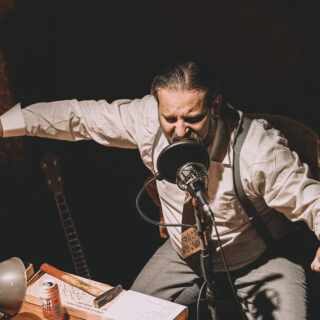
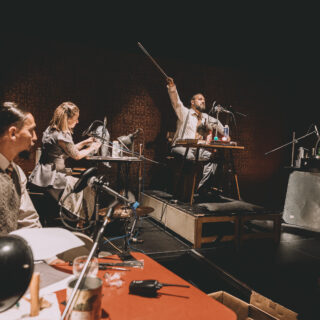
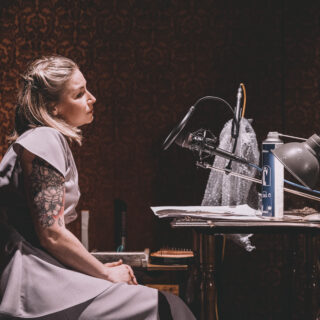
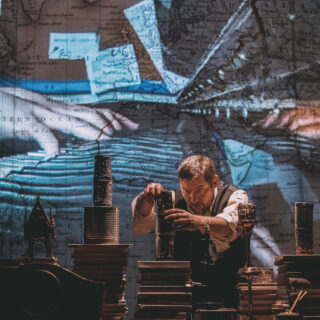
Long ago, on a cold Twelfth Night, an orphaned boy wandered through a hostile landscape. His name was Krabat. He had no idea where his name had come from. He no longer remembered his mother or father, as if he had never had them at all. He belonged to those children who must grow up too quickly. Only sometimes, as he was falling asleep, did he hear gentle whispers and soothing words that reminded him of home. That is why he loved to sink into the safety of his own dreams. But that night, it almost happened that he would remain trapped in their intoxication forever. Suddenly, however, the familiar voices dissolved into the tremendous strain of something far stronger. His body and mind, as if pulled on strings, were driven by a force more powerful than a mother’s voice, until Krabat found himself at an old mill… They say everyone should avoid that place. Perhaps it is inhabited by black magic, and one thing is certain: nothing good awaits anyone there. What choice does a boy have?
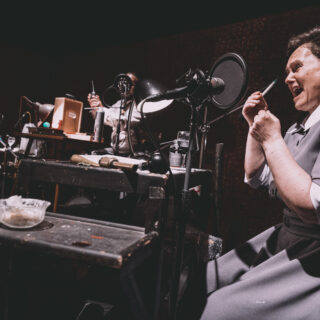
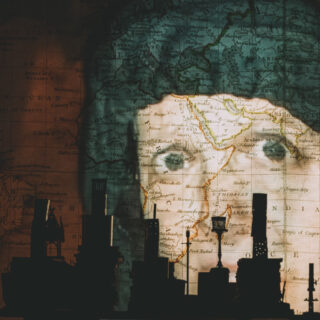
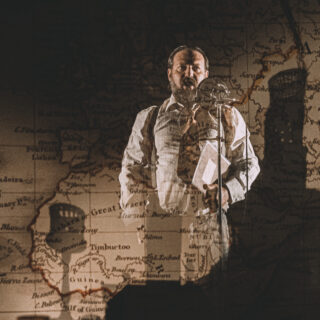
This stage production, inspired by a dark fairy-tale story based on an ancient Lusatian-Serb legend and given literary form in the early 1970s by Liberec-born author Otfried Preußler, tells the story of the orphan Krabat, who, on the threshold of adulthood, comes dangerously close to dark forces. At first, they seem like the perfect escape from the hardships of the world. Yet, as the boy soon discovers, magic demands a cruel price. The hero realizes he has found himself in the midst of a totalitarian system, firmly ruled by an ever-present yet unseen Master. The creative team Vašíček–Kamenická Pokorná–Czech–Čámský, who first came together while working on The Seven Ravens, continues with this production about a sorcerer’s apprentice to reinterpret well-known fairy tales in which love ultimately defeats darkness. They do so in a language that is characteristic not only of puppet theatre, but also, for instance, of Hitchcock-style detective stories.
- foto: Milan Hajn
- foto: Milan Hajn
- foto: Milan Hajn
- foto: Milan Hajn
- foto: Milan Hajn
- foto: Milan Hajn
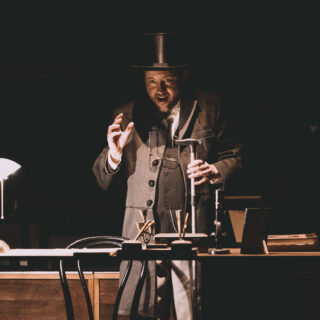
The War of the Worlds
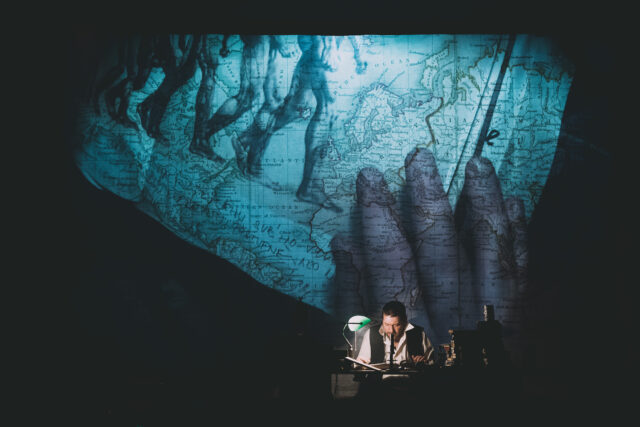
In 1898 H.G. Wells wrote The War of the Worlds, a dramatic novel about a Martian invasion of our planet. A century later, the French magazine Le Monde listed it as one of the 100 most important books of the 20th century; it was the oldest work on the list. The novel has had a profound influence on the genre of science fiction, inspiring countless writers and engaging generations of readers around the world. The story has been adapted for film and television, most notably Steven Spielberg’s 2005 Hollywood blockbuster.
The most famous and controversial adaptation of the novel was made not for television or the screen, but for radio. The director, Orson Welles (whose name, coincidently, was almost the same as H.G. Wells), produced it for the American network CBS. He chose to broadcast it on October 30, 1938, the day of the fictional invasion in the book. He presented his play as a live news report (Welles himself played the role of a reporter). Many listeners believed that an alien invasion was actually taking place, causing panic throughout the United States.
The radio production brought Orson Welles worldwide fame as well problems with the authorities. It was the first time people realized the enormous power of mass media. The radio play showed how reality can be manipulated and how it can influence a large part of the population. This phenomenon is very familiar to us today, a hundred years later. And with the development of social media and artificial intelligence, society seems to be increasingly defenseless against it.
Join us as we explore a world where it is almost impossible to tell what is fiction and what is reality. A world where things may not be what they seem. Our world.
In the media:
“For as long as I can remember, Drak Theatre has been able to (metaphorically) squeeze the entire universe into one hour. They do this while maintaining a sense of playfulness and are masters of surprise. Their latest show, which premiered last Saturday, is one of their best productions – a riveting, multi-layered version of The War of the Worlds.”
Petr Mareček, MF DNES, 13.05.2024
“What is appealing about the Drak production is that it addresses rather substantial issues, yet does not reproach nor preach, but rather nudges the audience to take the matter into their own hands.”
Vladimír Mikulka, 22.6.2024, nadivadlo.cz
- Válka světů – Divadlo Drak